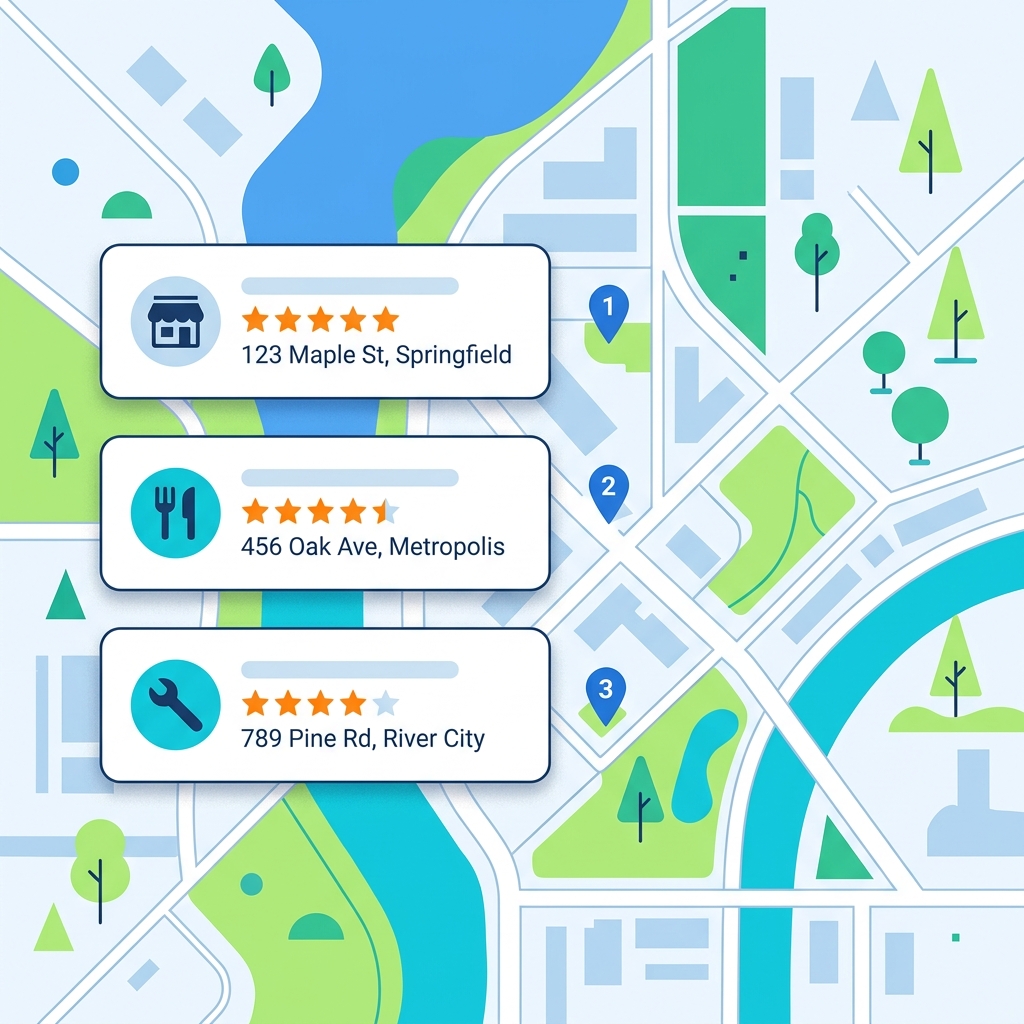
The Google Local Pack—often called the "Map Pack" or "3-Pack"—is the most valuable piece of real estate in local search. It's the section at the top of Google's results page that displays a map with three local business listings, complete with star ratings, addresses, and hours of operation.
For local businesses, appearing in the Local Pack is often more valuable than ranking #1 in organic results. It captures the majority of clicks for local-intent searches and is the first thing users see on mobile devices.
What Triggers the Local Pack?
Not every Google search produces a Local Pack. It only appears when Google detects local intent in the query. Google determines local intent through several signals:
Explicit Local Signals
- Queries containing "near me" (e.g., "coffee shop near me")
- Queries containing a city, state, or zip code (e.g., "dentist in Portland")
- Queries containing neighborhood names (e.g., "restaurant Williamsburg Brooklyn")
Implicit Local Signals
- Queries for services that are inherently local (e.g., "plumber," "hair salon," "car mechanic")
- Queries from mobile devices, which Google assumes have stronger local intent
- Queries that historically produce local click patterns in Google's data
Some queries will never trigger a Local Pack—like "what year was the Eiffel Tower built" or "Python programming tutorial"—because they have no local intent whatsoever.
Anatomy of a Local Pack Listing
Each of the three listings in the Local Pack typically includes:
- Business name — pulled from the Google Business Profile
- Star rating and review count — aggregated from Google reviews
- Business category — the primary category from GBP
- Address or distance — how far the business is from the searcher
- Hours status — "Open" or "Closed" indicator
- Phone number (on mobile, shown as a clickable call button)
- Website link — direct link to the business's website
On mobile devices, the Local Pack often takes up the entire screen, making it the dominant feature users interact with before scrolling to organic results.
How Local Pack Rankings Are Determined
Google's Local Pack rankings are determined by a separate algorithm from organic web rankings. The three primary factors are:
Relevance
How well your Google Business Profile matches the search query. This is primarily influenced by your primary category, secondary categories, services listed, and the content of your reviews.
Distance
How close your business is to the searcher's physical location. For "near me" searches, this is calculated from the user's GPS coordinates. For city-name searches, it's calculated from the geographic center of the named city.
Prominence
How well-known and trusted your business is online. This is measured through review quantity and quality, citation consistency, backlink profile, and overall web presence.
Strategies to Rank in the Local Pack
1. Nail Your Google Business Profile
This is non-negotiable. Your GBP must be:
- Completely filled out — every field, every section
- Accurately categorized — choose the most specific primary category available
- Regularly updated — post weekly, add new photos monthly
2. Build Review Momentum
Reviews are the most actionable ranking factor you can influence:
- Create a simple system for requesting reviews after every job or appointment
- Respond to every single review (positive and negative)
- Never incentivize or purchase reviews — the penalties are severe
- Aim for a steady stream of 2-4 new reviews per week rather than 50 reviews in one burst
3. Ensure NAP Consistency
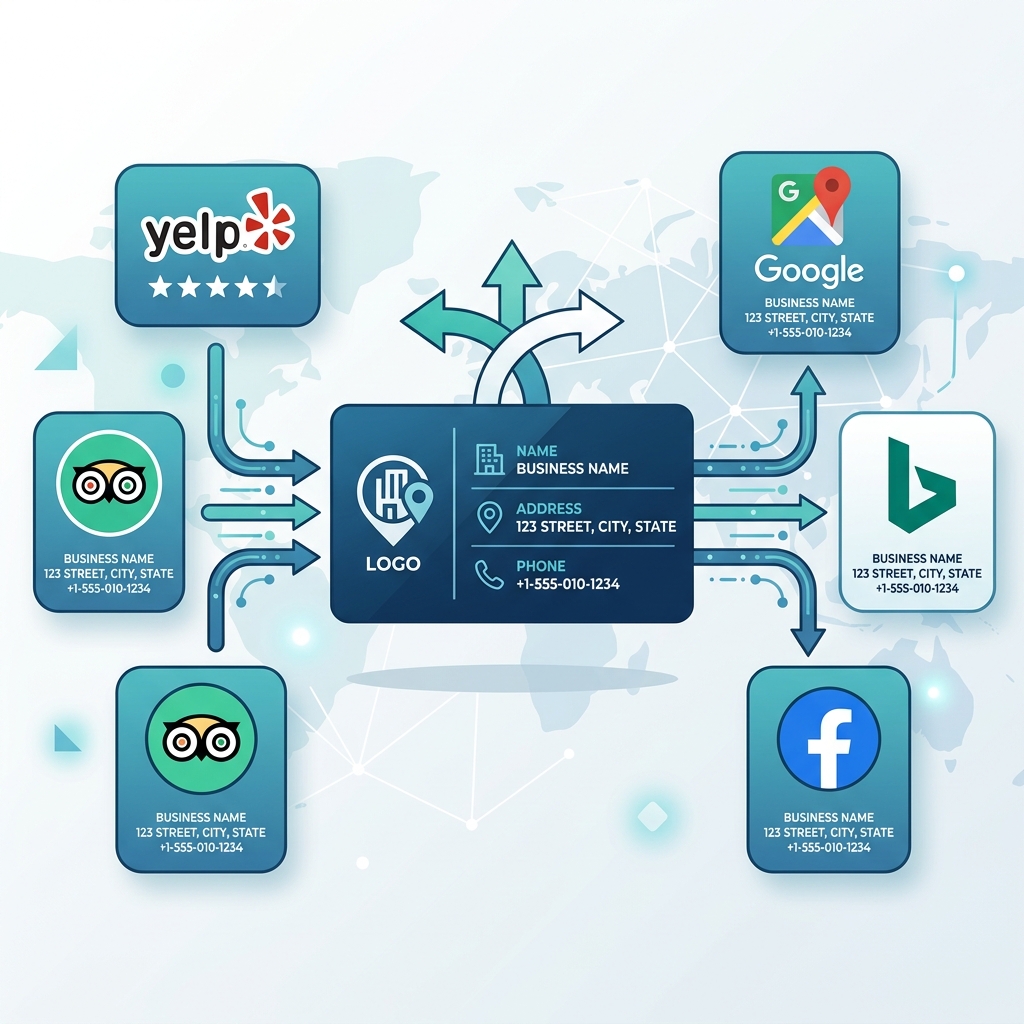
Your Name, Address, and Phone number must be identical everywhere it appears online:
- Your website
- Your Google Business Profile
- Yelp, Facebook, BBB, and industry directories
- Local chamber of commerce listings
Even small inconsistencies (like "Street" vs "St." or different phone numbers) can confuse Google's entity recognition and hurt your rankings.
4. Build Local Citations
Citations are mentions of your business on other websites. Focus on:
- Major data aggregators (Data.com, Neustar Localeze, Factual)
- Industry-specific directories
- Local business associations and chambers of commerce
- Local news sites and blogs
5. Optimize Your Website for Local SEO
While the Local Pack algorithm is separate from organic rankings, your website still influences Local Pack performance:
- Include your city and service area in title tags and headers
- Create dedicated service pages for each location you serve
- Implement LocalBusiness schema markup
- Ensure fast mobile page load times
6. Leverage Google Business Profile Features
Take advantage of every feature Google offers:
- Products and Services — list everything with descriptions and pricing
- Q&A — proactively ask and answer common questions
- Booking — integrate a booking link if applicable
- Messaging — enable direct messaging for quick customer inquiries
The "More Places" Overflow
When a user clicks "More places" below the Local Pack, they see an expanded list of 20+ businesses. Ranking here (positions 4-20) is still valuable because many users do click through, especially for high-consideration services like healthcare, legal, and financial services.
If you're stuck in the "More Places" section, focus on closing the gap with the top 3 by aggressively building reviews and ensuring your GBP is more complete than your competitors'.
Further Reading
- Understand the algorithm that powers these rankings: How Google's Local Search Algorithm Works in 2026
- Optimize your listing to compete: What is a Google Business Profile? Setup Guide for Beginners
- Learn the broader context of SERP features: The Anatomy of a Google Search Results Page in 2026
Key Takeaways
- The Local Pack is the most clicked section for local-intent searches
- It's powered by a separate algorithm from organic rankings, focusing on relevance, distance, and prominence
- Google Business Profile optimization is the foundation of Local Pack success
- Review velocity and NAP consistency are the most actionable ranking factors
- Mobile users interact with the Local Pack before anything else on the page
Digital marketer specializing in Local SEO and PPC. James has spent years helping businesses and agencies understand what their customers actually see on Google — and built QueryFrom to make that process faster for everyone.