The Google search results page of 2026 looks nothing like the simple list of blue links that launched the company in 1998. Today's SERP is a dynamic, personalized dashboard packed with dozens of distinct features—each competing for the user's attention and click.
For SEO and PPC professionals, understanding every element on this page is critical. Each feature represents either an opportunity to capture traffic or a threat that pushes your listing further down the page.
Let's walk through the modern Google SERP from top to bottom.
The Top of the Page
AI-Generated Summary (Search Generative Experience)
For many informational queries, Google now displays an AI-generated summary at the very top of the results page. This box synthesizes information from multiple sources and provides a direct answer to the user's question.
Impact on SEO: AI summaries can significantly reduce click-through rates to organic results for simple informational queries. However, they also cite sources, creating a new pathway for visibility.
Google Ads (Sponsored Results)
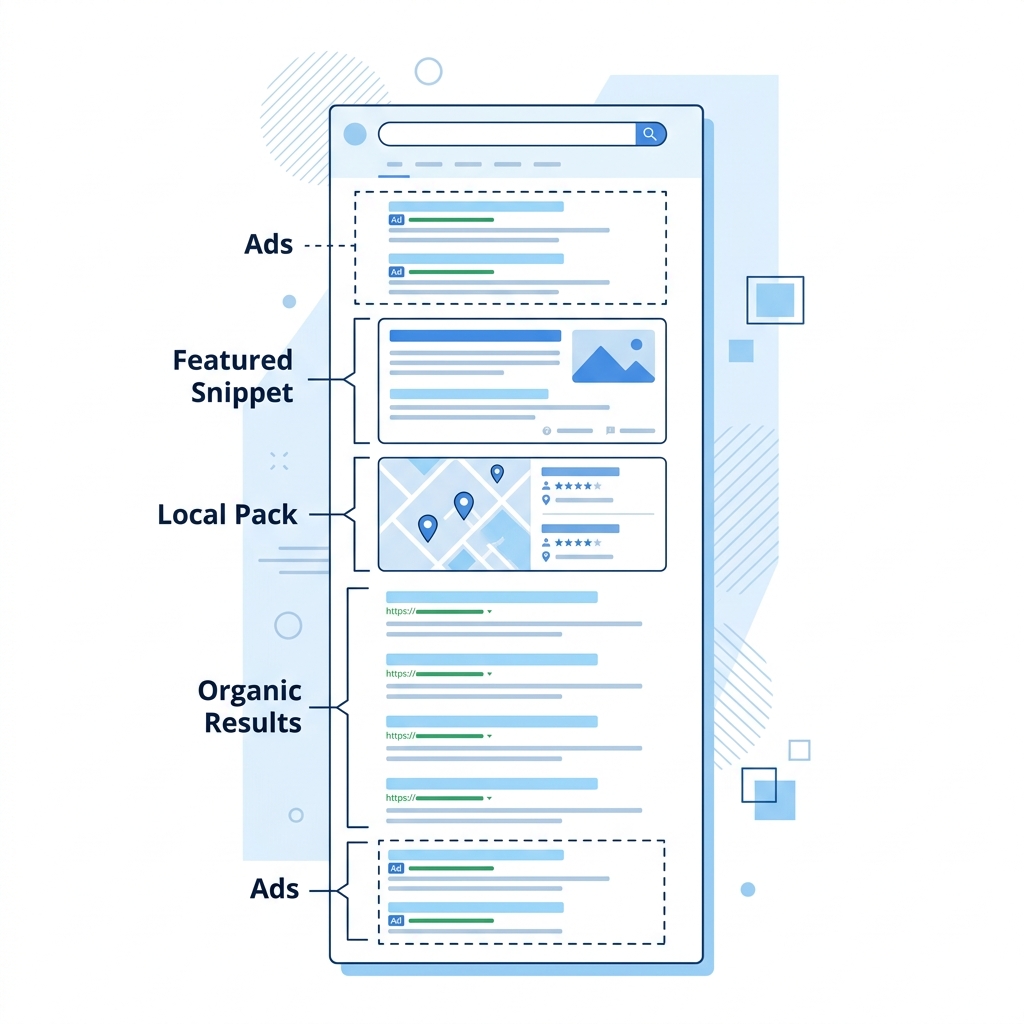
Paid search ads appear with a "Sponsored" label, typically occupying the first 1-4 positions on the page. For commercial queries, ads can take up the entire visible screen on mobile devices.
Key elements of a search ad:
- Up to 3 headlines (30 characters each)
- 2 description lines (90 characters each)
- Display URL
- Ad extensions (sitelinks, callouts, structured snippets, location, call)
Google Shopping Carousel
For product-related searches, Google displays a horizontal scrollable carousel of product listings with images, prices, star ratings, and merchant names. These are powered by Google Merchant Center feeds and Shopping Ads.
The Middle of the Page
Local Pack (Map Pack)
For searches with local intent, Google displays a map with three local business listings. Each listing shows the business name, star rating, review count, category, address/distance, and hours.
The Local Pack is arguably the most valuable SERP feature for local businesses because it captures the majority of clicks for local-intent searches.
Organic Results
The traditional "ten blue links" now typically appear below the ads, Local Pack, and any SERP features. Each organic result includes:
- Page title (clickable, shown in blue)
- URL breadcrumb (shown in green/gray)
- Meta description (2-3 line snippet, sometimes dynamically generated by Google)
- Rich snippets (star ratings, prices, event dates, FAQ dropdowns — powered by structured data)
Featured Snippet (Position Zero)
For question-based queries, Google may extract a direct answer from a webpage and display it in a prominent box above the organic results. Types include:
- Paragraph snippets: A text block answering the question
- List snippets: Ordered or unordered lists (common for "how to" and "best of" queries)
- Table snippets: Data presented in table format
- Video snippets: A YouTube video with a key moment timestamp
People Also Ask (PAA)
An expandable accordion section showing related questions. Each question reveals a brief answer with a source link. Clicking one question generates additional related questions, creating an infinite exploration loop.
SEO opportunity: If your page is cited as the source for a PAA answer, you gain significant additional visibility without needing a top-3 organic ranking.
Knowledge Panel
For entity-based searches (people, businesses, places, organizations), Google displays a large information card on the right side (desktop) or at the top (mobile). Knowledge Panels pull data from:
- Wikipedia/Wikidata
- Official websites
- Google's Knowledge Graph
- Verified Google Business Profiles
Image Pack
A horizontal row of images related to the search query. Clicking an image opens Google Images. This feature is common for visual queries ("types of kitchen cabinets," "wedding centerpiece ideas").
Video Results
Video thumbnails, primarily from YouTube, displayed inline with organic results. Google may show a "Key moments" feature that lets users jump to specific timestamps within a video.
The Bottom of the Page
Related Searches
A section showing 8 related search queries that other users have searched for. These are valuable for keyword research because they represent Google's understanding of related user intent.
Google Ads (Bottom)
Additional paid ads may appear at the bottom of the page, below the organic results. These positions are less expensive than top-of-page placements.
Pagination
Links to subsequent pages of results, though with the increasing density of SERP features, fewer users navigate beyond page one.
SERP Features by Query Type
Different types of queries trigger different SERP layouts:
| Query Type | Common SERP Features |
|---|---|
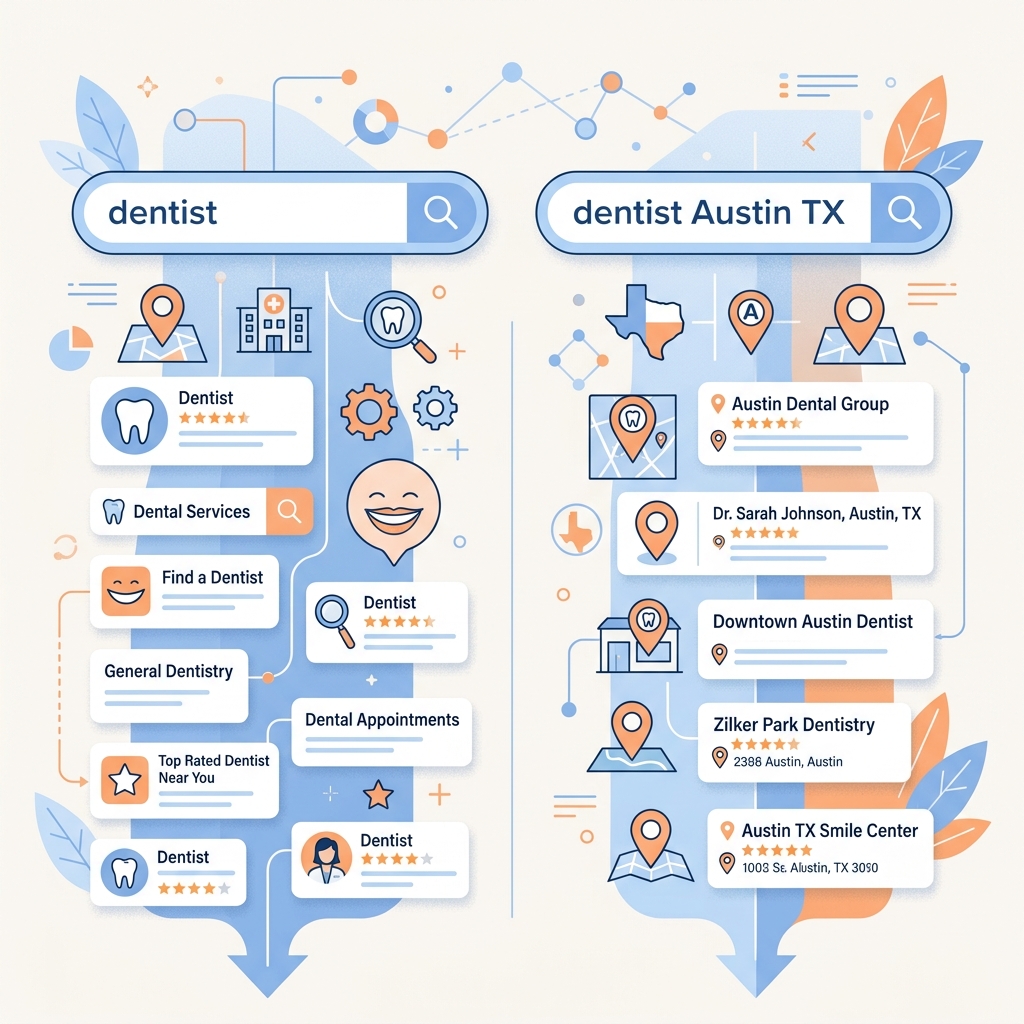
| Local service ("plumber near me") | Local Pack, Ads, PAA |
| Product ("buy running shoes") | Shopping, Ads, Reviews |
| Informational ("how does SEO work") | Featured Snippet, PAA, AI Summary |
| Navigational ("facebook login") | Sitelinks, Knowledge Panel |
| News ("election results 2026") | Top Stories, Twitter/X carousel |
| Visual ("modern kitchen designs") | Image Pack, Video results |
How SERP Features Affect Your Strategy
For SEO Professionals
- Analyze which features appear for your target keywords before choosing a strategy
- If a Featured Snippet dominates, optimize your content to win it
- If a Local Pack appears, invest in Google Business Profile optimization
- If AI summaries appear, ensure your content is cited as a source
For PPC Managers
- Calculate the "pixel real estate" your ads occupy vs. organic features
- Use extensions aggressively to increase ad size
- Consider whether Shopping Ads or Search Ads are more appropriate for your keywords
For Content Creators
- Target PAA questions with concise, authoritative answers
- Optimize videos for featured video snippets with clear titles and timestamps
- Use structured data to earn rich snippets (FAQ schema, HowTo schema, Review schema)
Further Reading
- Start with the fundamentals: What is a SERP? A Complete Guide to Search Engine Results Pages
- Understand what triggers the local section: Understanding Google's Local Pack: What It Is and How to Rank
- Learn how query type changes the layout: Implicit vs Explicit Search Queries: Why Intent Changes Everything
Key Takeaways
- The modern SERP contains 10+ distinct feature types beyond traditional blue links
- Each feature type has its own optimization strategy
- AI summaries are reshaping how informational queries are answered
- Local Packs dominate local-intent searches and require GBP optimization
- Understanding the SERP layout for your target keywords should be the first step in any SEO or PPC strategy
Digital marketer specializing in Local SEO and PPC. James has spent years helping businesses and agencies understand what their customers actually see on Google — and built QueryFrom to make that process faster for everyone.