If you've read anything about local SEO, you've probably encountered the term "NAP citations." But what exactly are they, and why does every local SEO guide insist they're so important?
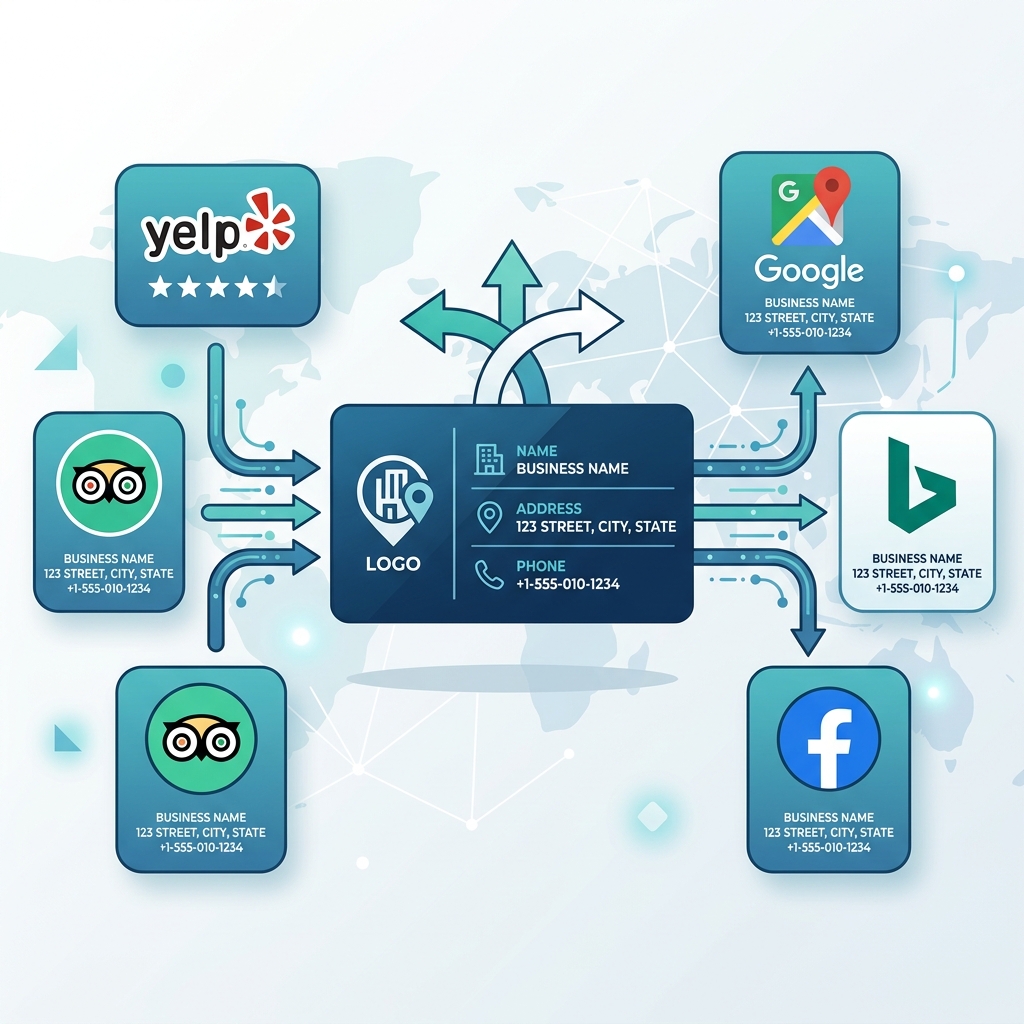
NAP stands for Name, Address, and Phone number. A citation is any online mention of your business's NAP data—whether it's a full listing on Yelp, a mention on a local blog, or your business information in an industry directory.
Citations are one of the foundational ranking factors for Google's local search algorithm, and inconsistencies in your NAP data can directly harm your visibility in the Local Pack.
Why Citations Matter for Local SEO
Google's local algorithm needs to trust that your business is legitimate, that it's located where you say it is, and that the information it shows to searchers is accurate. Citations help Google establish this trust.
Building Entity Confidence
When Google sees the same Name, Address, and Phone number consistently listed across dozens of authoritative websites, it gains confidence that your business is a real, established entity. This "entity confidence" directly contributes to the Prominence factor in local rankings.
Validating Your Google Business Profile
Your Google Business Profile is the primary source of your local listing data. Citations on other websites act as independent validation. If 50 directories list the same address as your GBP, Google is more confident that the address is correct.
Discovery and Indexing
Citations on high-authority websites can help Google discover your business faster and index your website more effectively. A listing on Yelp or the Better Business Bureau sends a strong signal to Google's crawlers.
Types of Citations
Structured Citations
These are formal business listings on directory websites where your NAP data is entered in a standardized format:
- General directories: Yelp, Yellow Pages, BBB, Foursquare
- Industry-specific directories: Avvo (legal), Healthgrades (medical), HomeAdvisor (home services)
- Social platforms: Facebook Business, LinkedIn Company Pages
- Data aggregators: Data.com, Neustar Localeze, Factual
Unstructured Citations
These are informal mentions of your business on non-directory websites:
- Local news articles mentioning your business
- Blog posts reviewing your services
- Event sponsorship pages listing your company
- Chamber of Commerce member listings
Both types contribute to your citation profile, but structured citations are easier to control and audit.
The Consistency Problem
Here's where many businesses fail: inconsistency.
Over the years, businesses change phone numbers, move to new addresses, or rebrand. If your old NAP data lives on in forgotten directory listings, Google encounters conflicting information—and conflicting information reduces trust.
Common inconsistency issues include:
- Name variations: "Joe's Plumbing" vs "Joe's Plumbing LLC" vs "Joe's Plumbing & Heating"
- Address format: "123 Main Street, Suite 4" vs "123 Main St #4" vs "123 Main Street"
- Phone numbers: A local number on your website but a toll-free number on Yelp
- Old addresses: Previous business locations still listed on directories you forgot about
Even seemingly minor differences—like "Street" vs "St."—can cause issues if they create ambiguity in Google's entity recognition system.
How to Audit Your Citation Profile
Step 1: Search for Your Business
Google your business name along with your city. Review the first 3-5 pages of results and note every directory listing you find. Check that the NAP data on each one is correct.
Step 2: Check Major Data Aggregators
The four major data aggregators in the US supply information to hundreds of smaller directories:
- Data.com (formerly Dun & Bradstreet)
- Neustar Localeze
- Factual (now part of Foursquare)
- Infogroup
If your data is wrong at the aggregator level, the error cascades to hundreds of downstream directories.
Step 3: Use Free Citation Audit Tools
Several free and low-cost tools can scan the web for your business listings and flag inconsistencies. Look for tools that check across 50+ directories simultaneously.
Step 4: Document and Prioritize
Create a spreadsheet listing every citation, the current NAP data, and whether it needs correction. Prioritize:
- Major platforms (Google, Yelp, Facebook, BBB)
- Industry-specific directories
- Data aggregators
- Smaller local directories
How to Fix Citation Inconsistencies
Claim and Update Listings
For directories where you can create an account, claim your listing and update the information directly. Most major directories allow this for free.
Submit Corrections to Aggregators
For data aggregators, submit updated information through their official correction portals. Changes can take 2-8 weeks to propagate downstream.
Suppress Duplicate Listings
If you find duplicate listings for your business on the same directory (common after a move or name change), request suppression of the old listing rather than just updating it.
Monitor Ongoing Accuracy
Citations aren't a "set and forget" task. New listings can be auto-generated from outdated data sources, and aggregators can revert changes. Check your citations quarterly.
How Many Citations Do You Need?
There's no magic number. The quantity matters less than the quality and consistency. Focus on:
- The "Core 50" — the 50 most authoritative general and industry-specific directories
- Quality over quantity — 30 perfectly consistent citations outperform 200 inconsistent ones
- Matching your competitors — check how many citations your top Local Pack competitors have and aim to match or exceed them
Further Reading
- See how citations feed into the ranking algorithm: How Google's Local Search Algorithm Works in 2026
- Optimize the profile itself: What is a Google Business Profile? Setup Guide for Beginners
- Understand the broader strategy: Local SEO vs National SEO: Key Differences Explained
Key Takeaways
- NAP stands for Name, Address, and Phone number — the foundation of local business identity online
- Citations are online mentions of your NAP data on directories, aggregators, and other websites
- Consistency is more important than quantity — conflicting NAP data directly harms local rankings
- Audit your citations quarterly and prioritize major platforms and data aggregators
- Think of citations as "votes of confidence" that validate your Google Business Profile data
Digital marketer specializing in Local SEO and PPC. James has spent years helping businesses and agencies understand what their customers actually see on Google — and built QueryFrom to make that process faster for everyone.