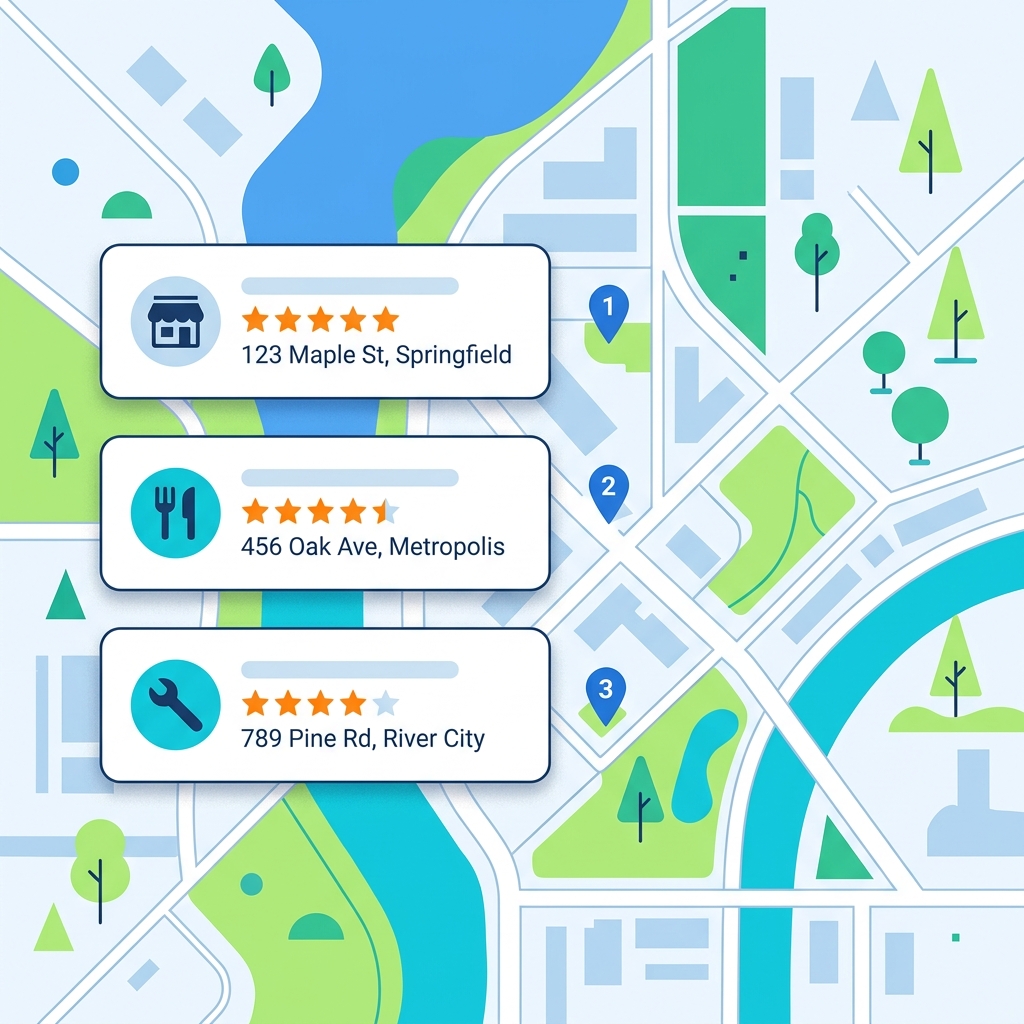
Google processes billions of local searches every day. When someone types "plumber near me" or "best Italian restaurant," the search engine must instantly decide which of potentially thousands of local businesses deserve to appear in the coveted three-slot Local Pack at the top of the results page.
But how does Google actually make that decision? Understanding the mechanics of Google's local search algorithm is essential for anyone trying to improve their visibility in local results.
The Three Pillars of Local Search Ranking
Google has publicly confirmed that its local search algorithm relies on three primary factors: Relevance, Distance, and Prominence. While Google doesn't reveal the specific weight of each factor, extensive testing by the SEO community has given us a practical understanding of how they interact.
1. Relevance
Relevance measures how well a local Business Profile matches what the searcher is looking for. Google determines relevance by analyzing:
- Primary and secondary categories set on your Google Business Profile (GBP)
- Business name (though keyword-stuffing your business name violates Google's guidelines)
- Services and products listed in your GBP
- Website content associated with your listing
- Reviews that mention specific services
For example, if a user searches for "emergency root canal," a dental practice that has "Endodontist" as its primary category and mentions emergency services in its GBP description will be considered more relevant than a general dentist without those signals.
2. Distance (Proximity)
Distance is the physical space between the searcher and the business. This is the most straightforward factor, and in many industries, it is the most powerful.
When a user performs a search with local intent, Google calculates the distance from the user's device (using GPS, IP address, or WiFi data) to every eligible business. Businesses closer to the searcher receive a significant ranking boost.
Key nuances of the distance factor:
- "Near me" searches use the searcher's exact GPS coordinates as the center point
- City-modified searches (e.g., "plumber Chicago") use the geographic center of the named city
- Service-area businesses (those without a physical storefront) are ranked based on their listed service areas, but typically at a disadvantage compared to businesses with a verified physical address
3. Prominence
Prominence refers to how well-known and trusted a business is, both online and offline. Google assesses prominence through:
- Review count and average rating: A business with 200 reviews averaging 4.7 stars will generally outperform a competitor with 15 reviews at 4.9 stars
- Review velocity: The rate at which new reviews are being added. Consistent, ongoing reviews signal an active, trusted business
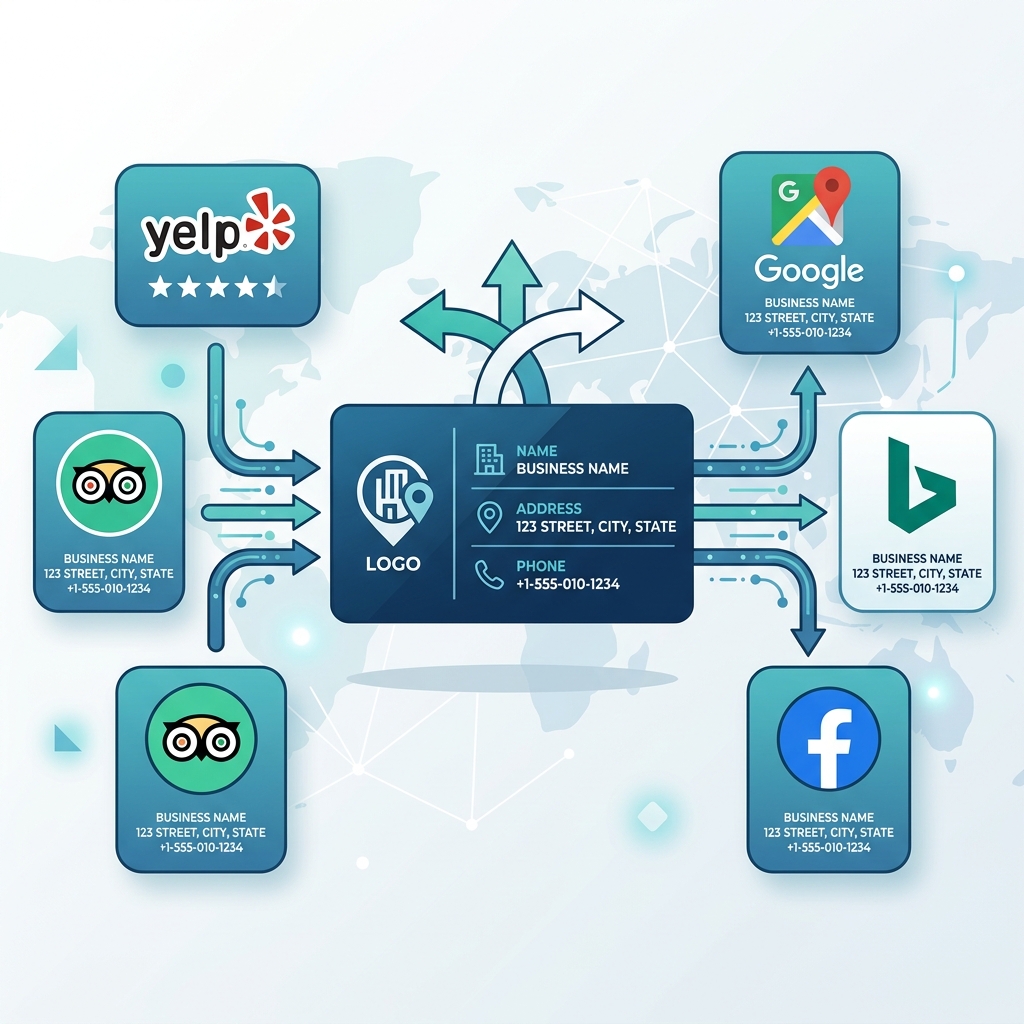
- Citations and directory listings: Consistent Name, Address, and Phone (NAP) data across directories like Yelp, BBB, and industry-specific platforms
- Backlinks to your website: Links from local news sites, community organizations, and industry publications build domain authority
- Brand searches: If many people search for your business by name, Google interprets this as a signal of prominence
- Engagement metrics: Click-through rates, direction requests, and phone calls from your GBP listing
How the Three Factors Interact
The three pillars don't operate in isolation—they create a dynamic ranking equation that shifts based on the query, industry, and location.
High-frequency, commodity services (coffee shops, gas stations, dry cleaners) are dominated by distance. Google assumes the user wants the closest option, so proximity becomes the overwhelming factor.
High-consideration services (lawyers, surgeons, financial advisors) allow prominence to override distance. Users are willing to drive further for a highly reviewed specialist, so a business with exceptional reviews and authority can rank beyond its immediate geographic radius.
Niche or specialized queries elevate relevance. If a user searches for "pediatric allergist," only practices with that specific category and service offering will be considered, regardless of how close a general practitioner might be.
The Role of Your Website in Local Rankings
While Google Business Profile optimization is critical, your website still plays a significant supporting role in local rankings:
- Localized content (city-specific service pages, local case studies) reinforces relevance signals
- Technical SEO (fast load times, mobile responsiveness, structured data) contributes to prominence
- NAP consistency between your website and GBP validates your business information
- Local schema markup (LocalBusiness JSON-LD) helps Google understand your business entity
Common Misconceptions About Local Rankings
"I can rank everywhere in my city by optimizing my GBP." Not necessarily. The proximity factor means your rankings will always be strongest near your physical location and weaken as the searcher moves further away. This is known as the "proximity bubble."
"Paying for Google Ads helps my organic local rankings." There is no evidence that running Google Ads affects organic or Local Pack rankings. They are separate systems.
"The more categories I add to my GBP, the better I'll rank." Adding irrelevant categories can actually hurt your relevance for your primary service. Only add categories that accurately describe services you provide.
Further Reading
- Learn how the Local Pack fits into the broader results page: Understanding Google's Local Pack: What It Is and How to Rank
- Understand the role of citations in prominence: What are NAP Citations and Why Do They Matter for Local SEO?
- For a beginner's guide to optimizing your listing: What is a Google Business Profile? Setup Guide for Beginners
Key Takeaways
- Google's local algorithm is built on three pillars: relevance, distance, and prominence
- Distance (proximity) is the hardest factor to overcome—your physical location matters enormously
- Prominence can be built over time through reviews, citations, backlinks, and brand awareness
- Relevance is optimized through accurate GBP categories, services, and localized website content
- The relative weight of each factor varies by industry and query type
Digital marketer specializing in Local SEO and PPC. James has spent years helping businesses and agencies understand what their customers actually see on Google — and built QueryFrom to make that process faster for everyone.